Carefree, AZ
Roofing in Carefree, Priced Line by Line Before the First Tile Moves
Our crew handles tile roofing, shingle roofing, foam roofing and flat roofing on homes in Carefree, Cave Creek and Scottsdale, from a slipped tile to a full tear-off. You see the materials, the flashing work and a per-sheet price for hidden decking on paper before anyone climbs up, so the last invoice matches what you signed.
- Line-item pricing
- No surprise add-ons
- Changes approved in writing
- Daily site cleanup
Roofing Work We Price and Build
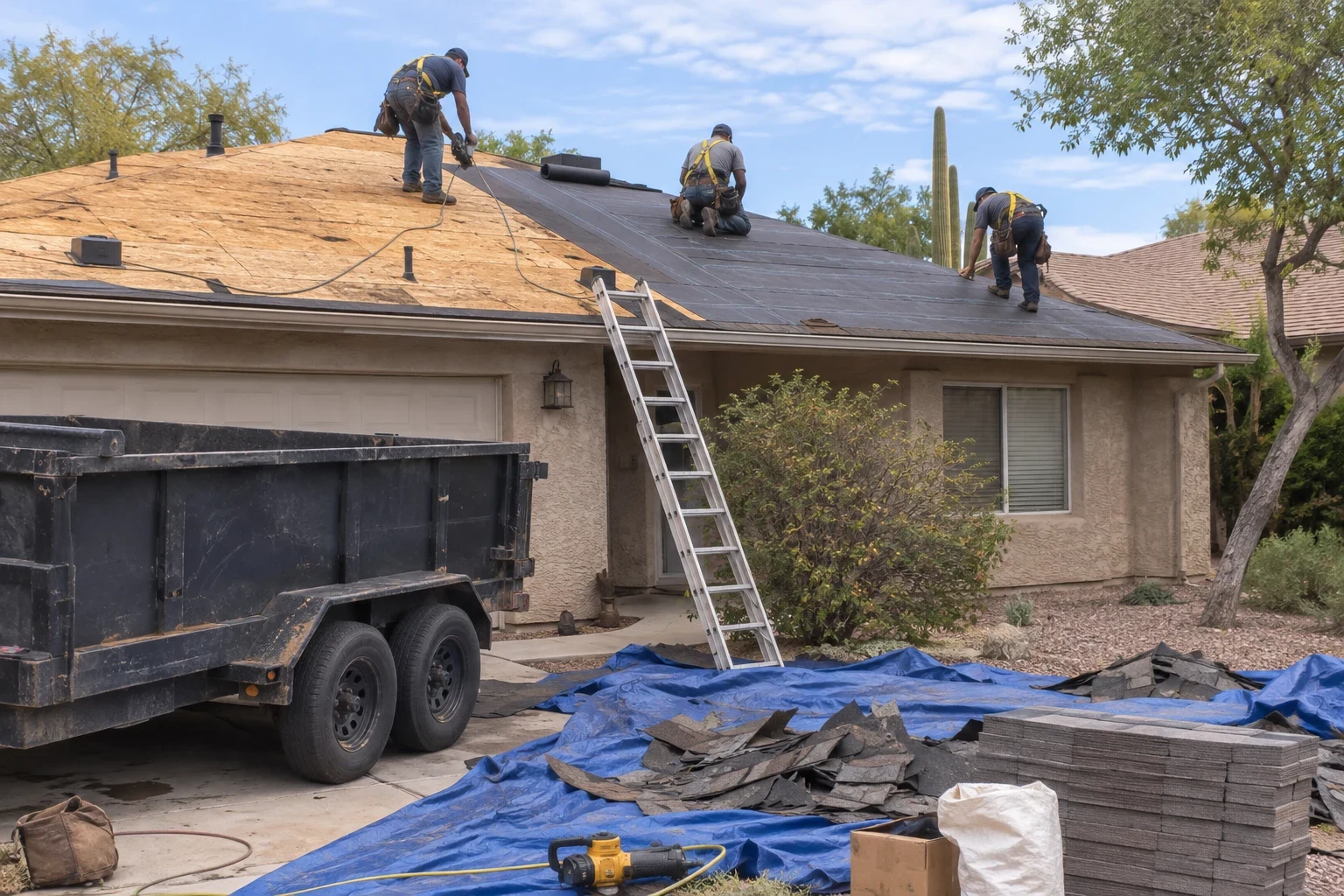
Pitched sections here are usually concrete or clay tile, some homes carry architectural shingle, and many have a low-slope deck behind a parapet finished in sprayed polyurethane foam or a membrane. We take on all of them. A job might be one cracked tile, a split seam at a scupper, a full roof replacement down to the deck, or a new roof installation over an addition. Every one starts with the same itemized scope before any ladder goes up.
Tile Roofing
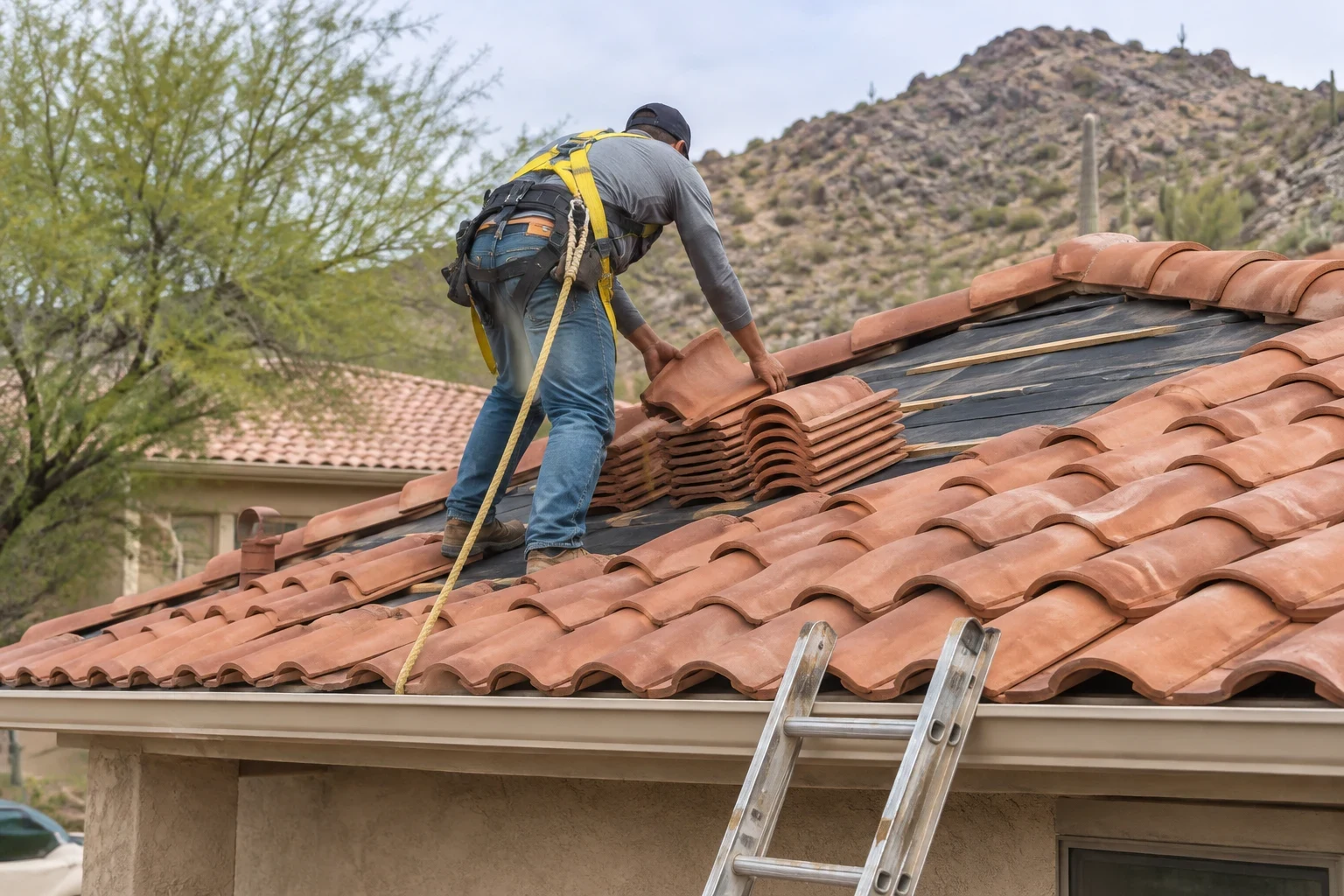
Concrete and clay tile roofs, from replacing worn underlayment under your existing tile to full new tile installs, with every line of scope written out.
Shingle Roofing
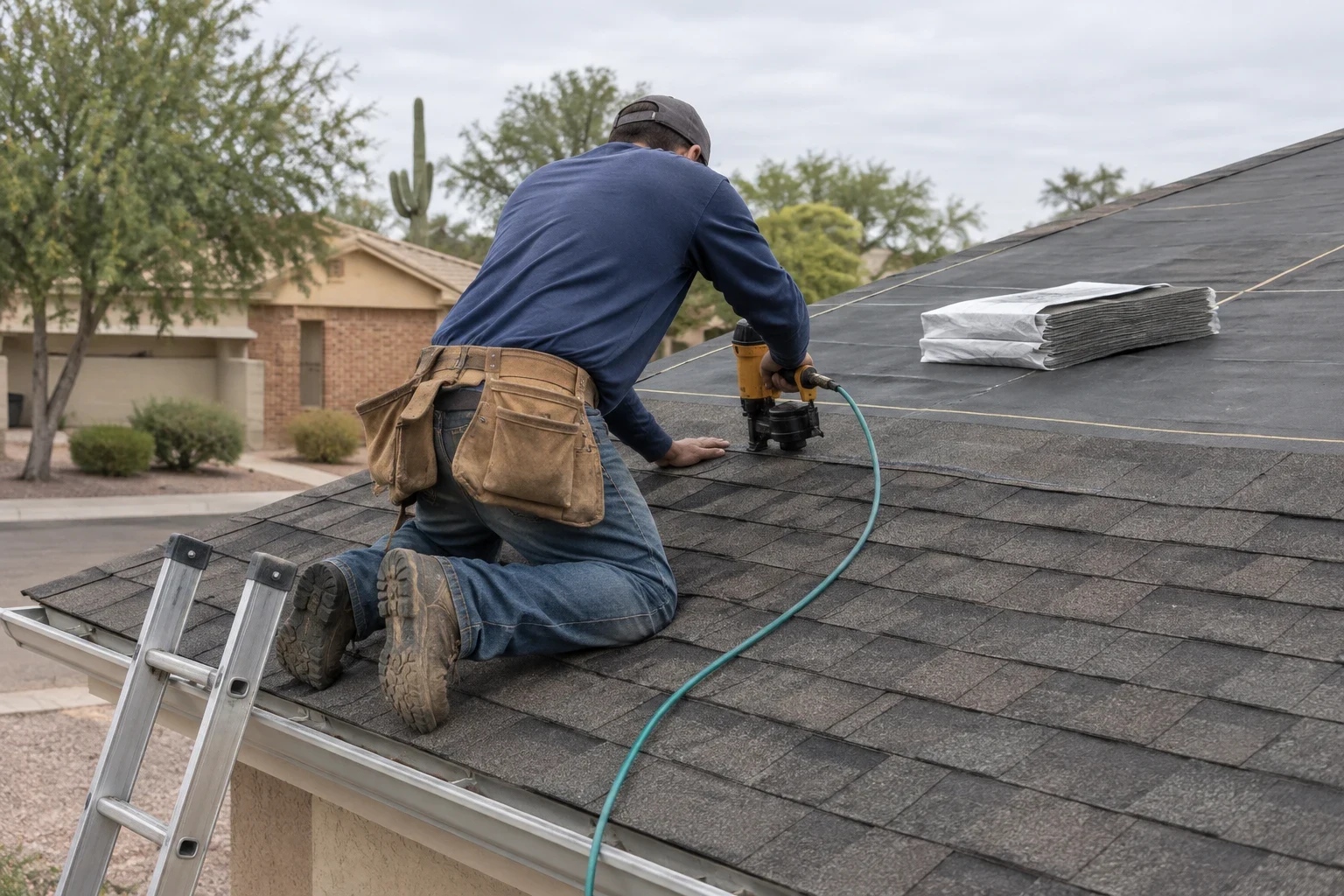
Asphalt shingle repairs and full shingle roofs, with underlayment, flashing and ventilation spelled out in a written scope before we start.
Foam Roofing
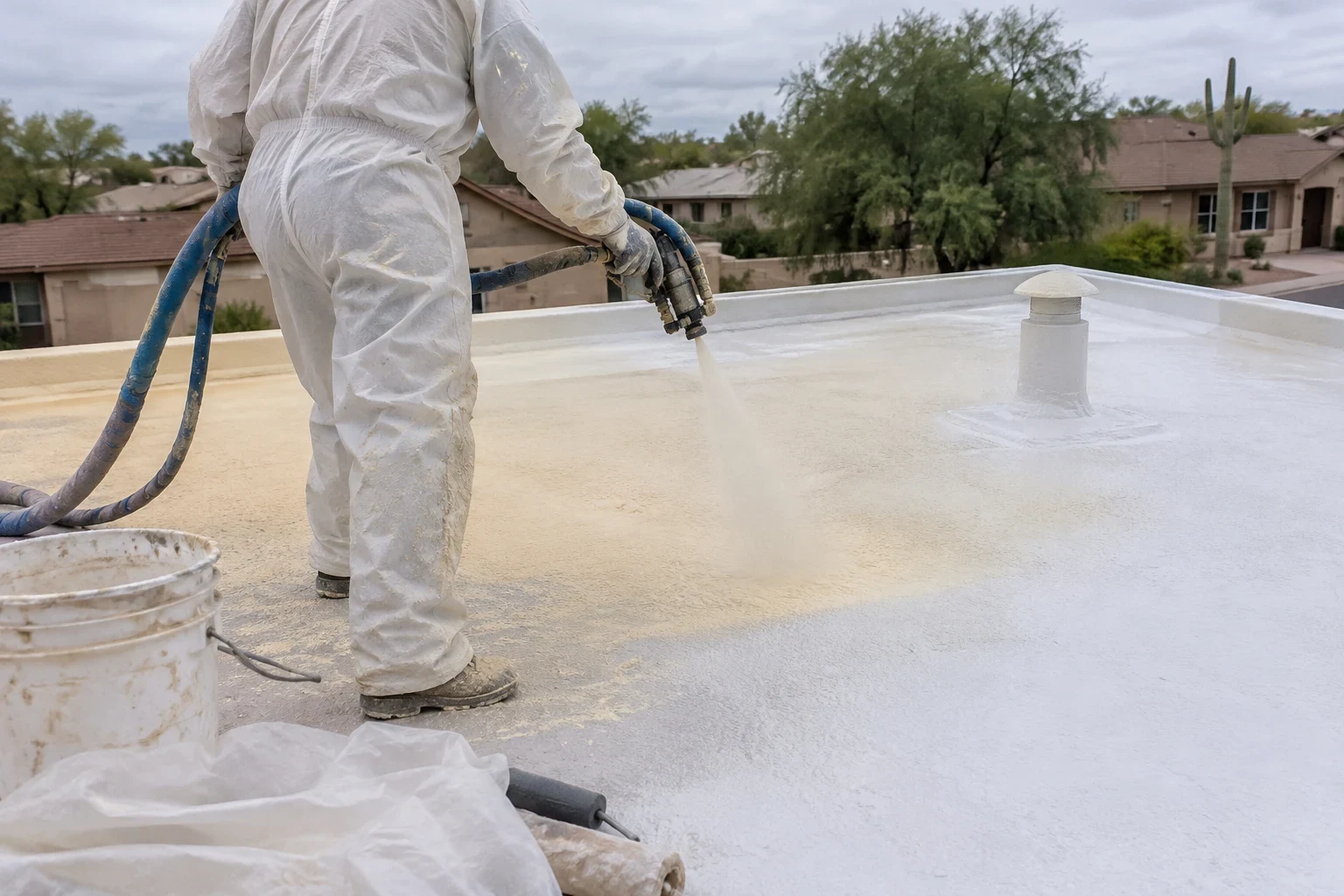
Spray polyurethane foam roofs and coating renewals for flat and low-slope homes, with thickness, coating and prep listed in writing before we start.
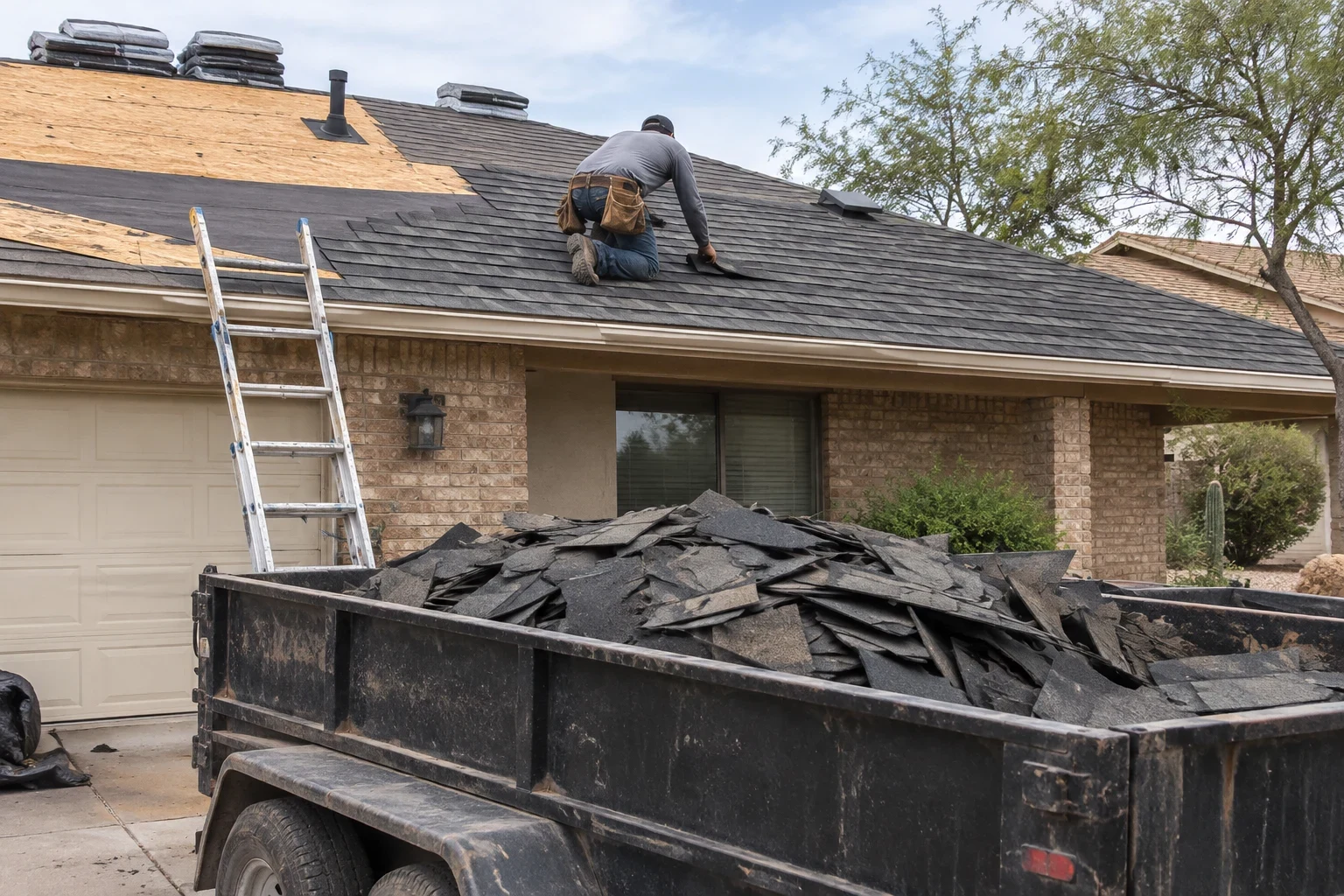
Roof Replacement
Full tear-off, new underlayment, decking and flashing for tile, shingle and foam roofs, with scope and price laid out line by line before we start.
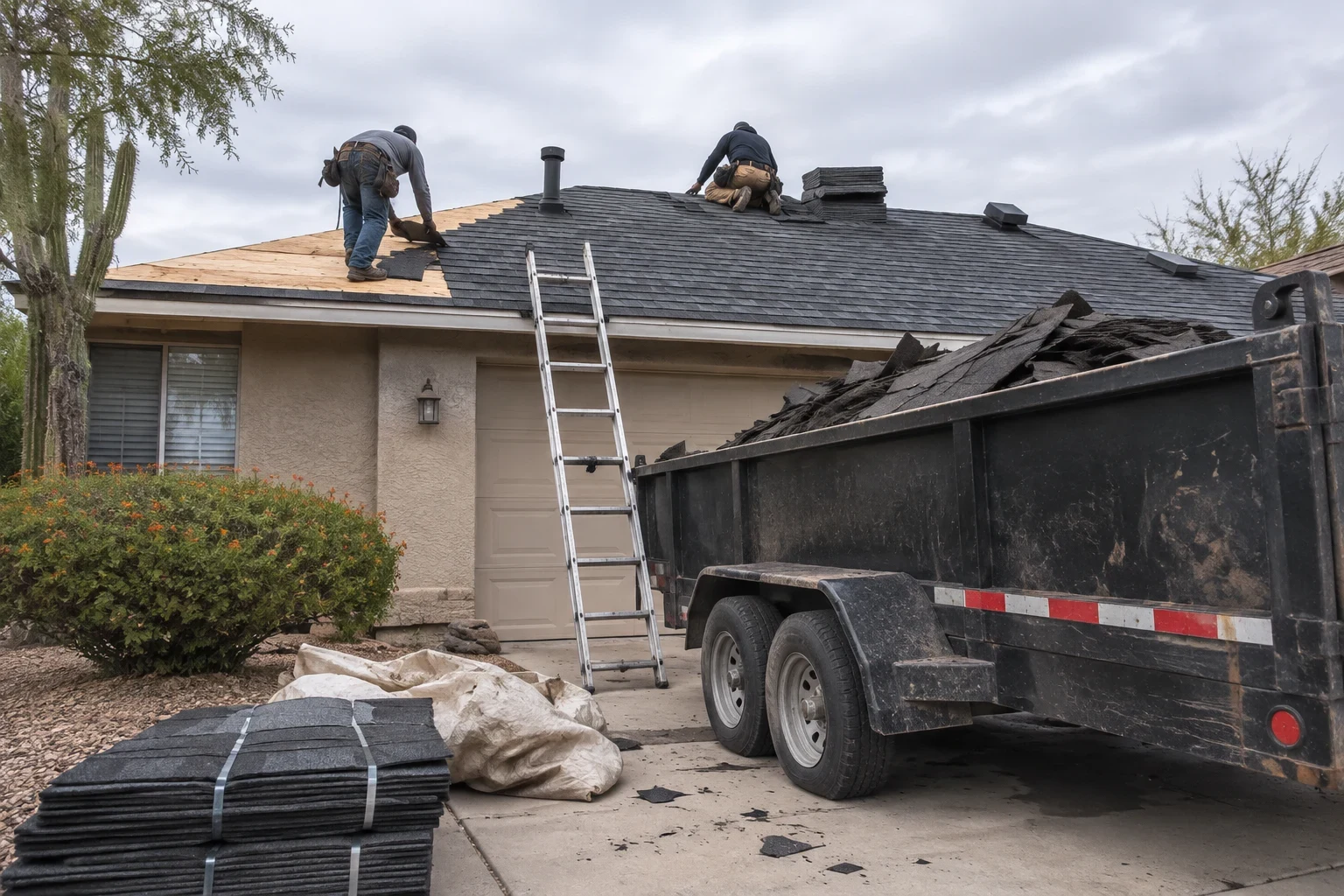
Roof Repair
We find the exact place water enters a tile, shingle, foam or flat roof and repair that spot, with the cause and cost on paper before work begins.
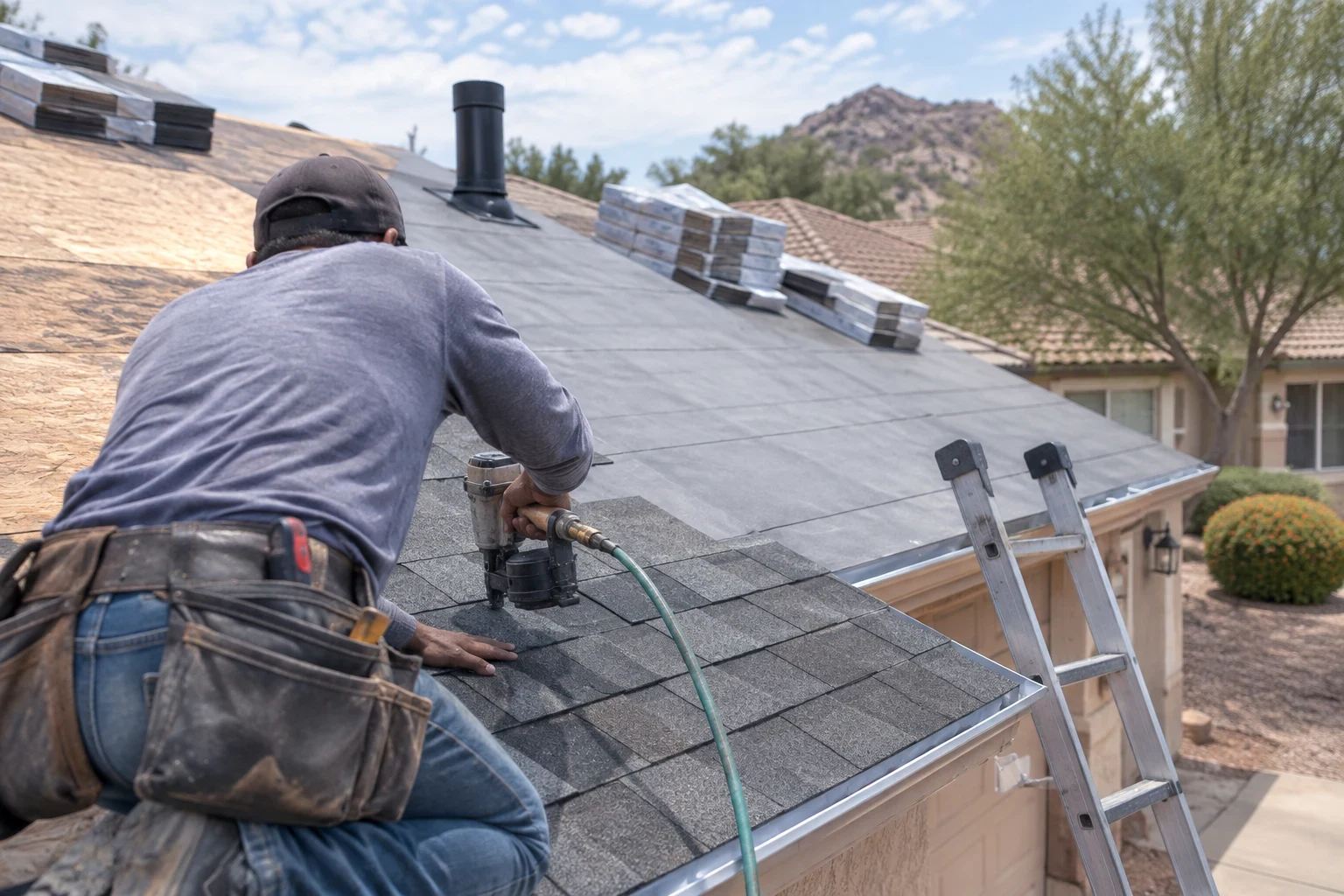
New Roof Installation
Tile, shingle, foam or flat roofs built on new framing for additions, casitas, garages and new homes, with a written scope before we start.
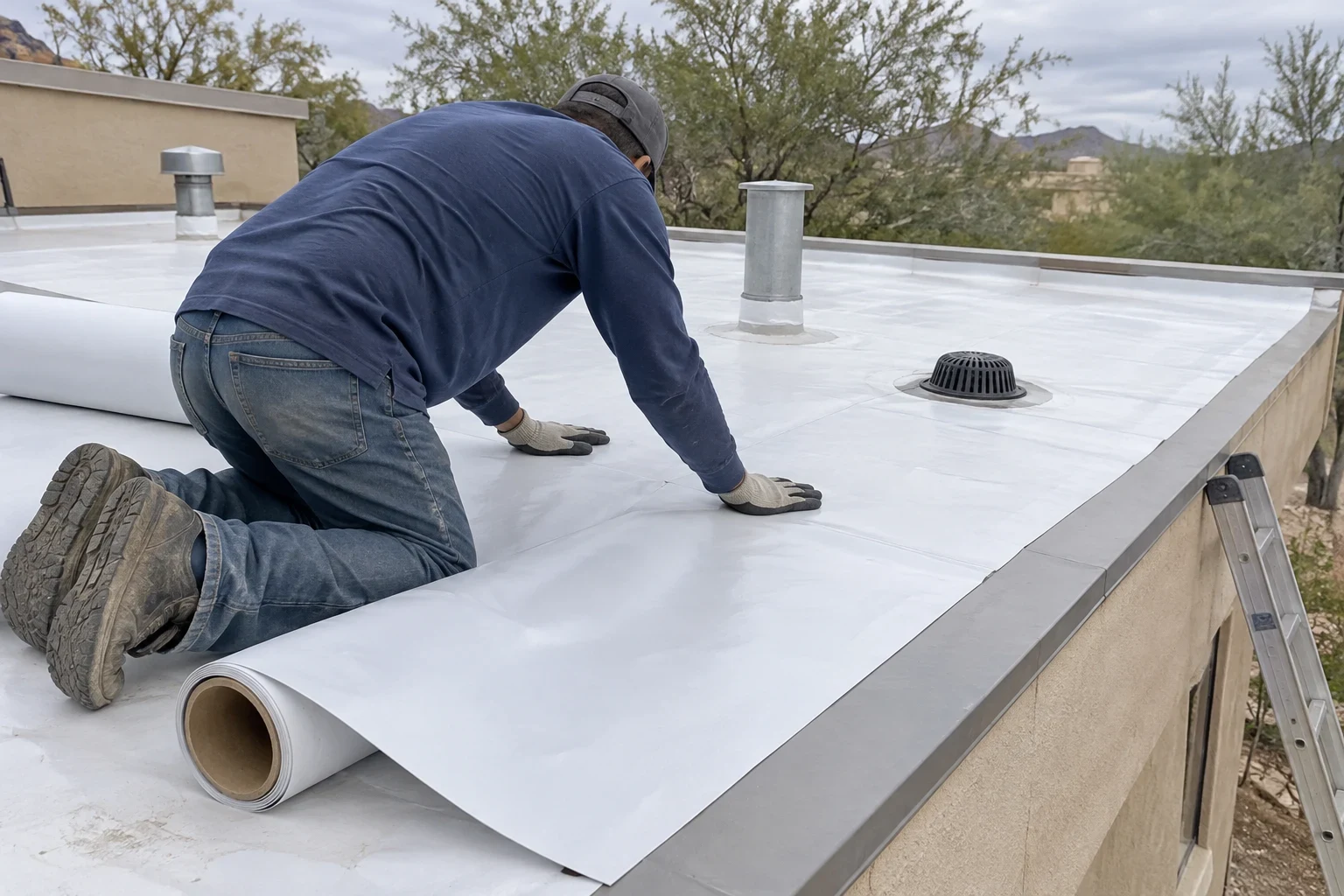
Flat Roofing
Modified bitumen, TPO and coated flat roofs built around parapets, scuppers and rooftop units, with every line of scope written down first.
A Roofing Company That Puts It on Paper
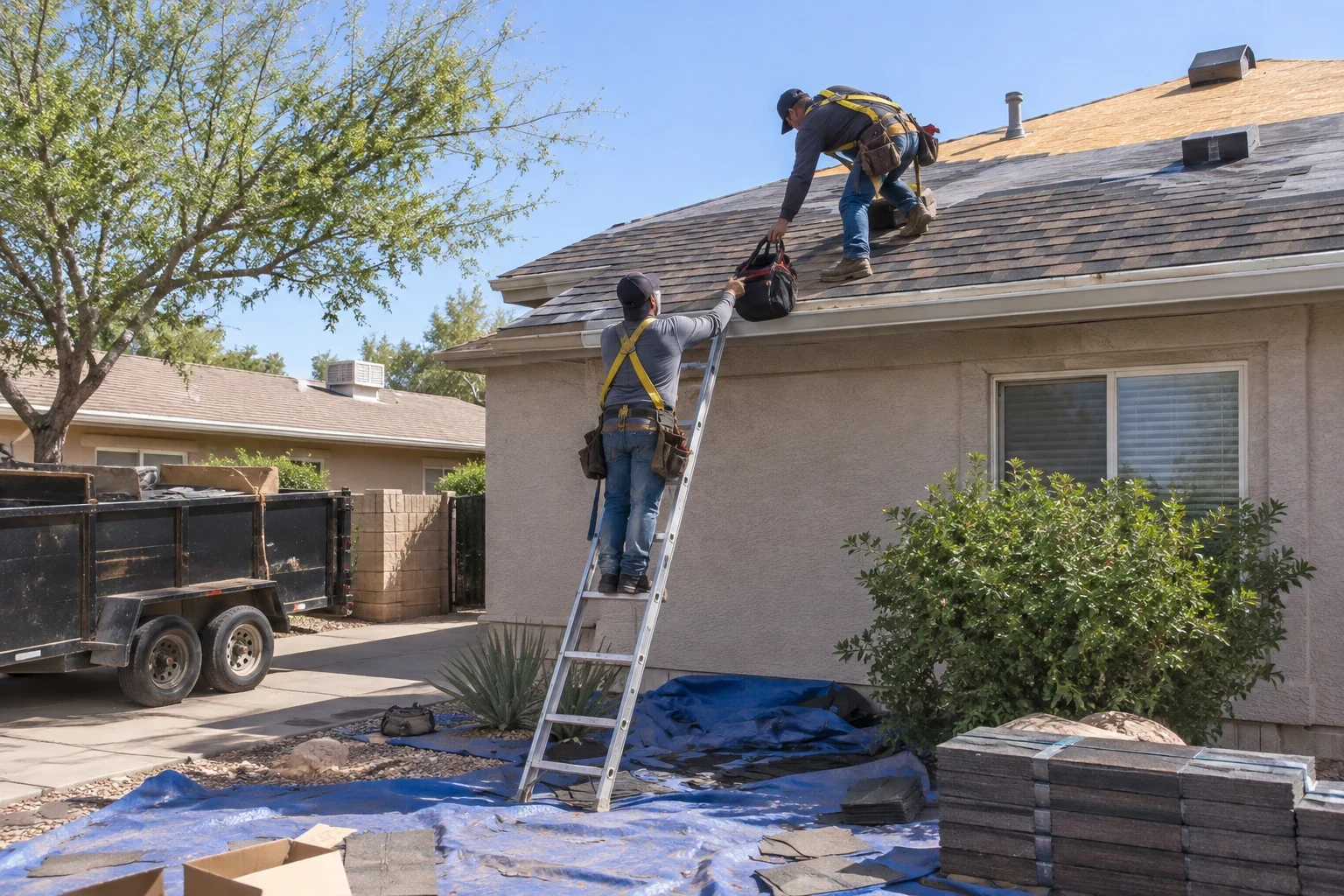
Carefree Roofing installs and repairs roofs on homes in Carefree and the towns around it. Our work covers tile roofing, shingle roofing, foam roofing and flat roofing, from a single cracked tile to a complete tear-off.
We work this way because the most common complaint about roofers is a bill that grows once the old roof comes off. A scope on paper solves that. You know what we will do, what it costs and how anything unexpected gets handled before the first tile comes down.
Up on the roof, we explain the why along with the what: why a pipe boot cracked, why water ponds near a scupper on a foam roof, why a valley leaks when the tile above it looks perfectly fine.
Where We Work
We work on homes in Carefree, AZ, and nearby in Cave Creek, Scottsdale, Anthem, New River and Fountain Hills. Plenty of homes in this area pair pitched tile with flat sections behind parapets, and we price both parts of the roof in one scope.
- Carefree
- Cave Creek
- Scottsdale
- Anthem
- New River
- Fountain Hills
If you live close by and are not sure we reach your street, ask when you phone. You will get a straight answer.
What Moves the Price of a Roof
Two roofs with the same footprint can land far apart on price. The gap usually comes from pitch, material and the condition of what sits under the surface. These are the things we measure and put on your estimate.
We put the numbers together after measuring the roof and looking at the surface, edges and flashing on site. The total you sign is the total you pay unless you approve a written change.
- Area and slope
- Roof area is counted in squares, each one covering 100 square feet. A steep slope needs more staging and slows the crew down. Every hip, valley and dormer adds cut pieces and flashing.
- Material
- Concrete tile, clay tile, architectural shingle and spray foam differ in material cost, weight and labor. Tile needs battens or a correct fastening pattern, and foam needs a UV-resistant elastomeric coating over it.
- Underlayment and decking
- Under tile, the underlayment often wears out long before the tile does because of the heat it sits in. Whether your tile can be reused, and how many deck sheets are soft, can shift the total more than most people expect.
- Flashing and penetrations
- Skylights, AC curbs, plumbing vents, chimneys and wall-to-roof transitions all need flashing. A roof with several rooftop units and parapet walls carries far more detail work than a simple gable.
- Tear-off and access
- Extra old layers, narrow side yards and long carry distances add labor. Old tile is heavy, so disposal weight counts too.
- Permit
- Most reroofs need a building permit. The fee sits on its own line so you can see exactly what it is.
How a Roof Job Runs, Start to Finish
Our jobs move through five stages in a fixed sequence. You know ahead of time which step is next and when each piece of paperwork lands in your hands.
- 1
Talk it over by phone
Describe what you are seeing: a ceiling stain, slipped tiles, blistered coating or a roof near the end of its life. We ask about roof type and age, then set a time to come out.
- 2
Measure and photograph
We measure each roof plane and look closely at the field, edges, valleys, flashing and penetrations. Photos go with the paperwork so you can see what we saw.
- 3
Line-item estimate
You receive a written estimate naming the scope, the materials by type, the per-sheet decking price, the schedule and the permit. Take the time you need with it. If a line is unclear, we will walk through it with you until it makes sense.
- 4
Work days
We pull the permit, cover plants and walkways, tear off, replace any failed decking, and lay underlayment and flashing before the finished surface goes on. Debris is cleared each afternoon.
- 5
Final walk-through
We walk the finished roof and yard with you and check the work against the signed scope. Your final invoice lines up with it.
How We Keep the Price From Moving
Most roofing arguments trace back to a vague estimate. Ours spells out what comes off, what goes on, and what happens if the old roof hides a problem.
- 01
Each part of the job priced on its own
Tear-off, underlayment, flashing, tile or shingle, coating, disposal and the permit each get a separate line. Before you sign, any line can be questioned, and we will explain what it covers and why it is there.
- 02
Hidden decking priced ahead of time
Plywood and OSB decking stay out of sight until tear-off. We set a per-sheet replacement price in your estimate. If we find rot, you already know the cost, and we show you the damaged sheet before it comes out.
- 03
Repair or replace, with the reasoning
If your tile is sound and only the underlayment has failed, lifting and relaying the same tile can make more sense than buying new. If a shingle roof has one cracked pipe boot, we say so plainly.
- 04
Changes approved on paper
Nothing gets added up on the roof by handshake. If the scope has to change, you get the change in writing and sign off before work continues.
- 05
A cleared site each afternoon
Old felt, broken tile and loose nails are hauled away. We sweep the driveway and run a magnet over walkways and gravel at the end of every work day.
Roofing Questions We Hear Most
How much will my roof cost?
We do not give a number before measuring the roof and seeing its condition, because pitch, material and the state of the decking change the total a lot. After the visit, we hand you a written estimate that breaks tear-off, materials, flashing, disposal and the permit into separate prices. That is what you sign and what you pay unless you approve a change.
What happens if you find rotted decking after tear-off?
Your estimate already carries a per-sheet price for replacing damaged plywood or OSB. If we find soft sheets, we photograph them, show you, and replace only those at the agreed rate. Nothing new appears on the final invoice.
My tile looks fine. Why is my roof leaking?
Concrete and clay tile shed most of the water, but the underlayment beneath is the real waterproof layer. Years of sun and attic heat dry it out until it cracks, most often at valleys and around vents. In many cases the tile can be lifted, the underlayment replaced and the same tile relaid.
Should I repair or replace my roof?
It depends on how much of the roof has failed and why. A cracked pipe boot or a few slipped tiles is a roof repair. Brittle underlayment across the whole roof, heavy granule loss on shingles, or foam that has lost its coating usually points to roof replacement. When both options are reasonable, we price both so you can compare them side by side.
Why does water sit on my flat roof?
Low-slope roofs still need a slight fall toward drains or scuppers. When the deck sags, foam is sprayed unevenly, or a scupper is partly blocked, water ponds and wears the coating or membrane faster in that spot. We find the low area, correct the slope where we can, and explain what will keep it draining.
How long does a roof replacement take?
Most reroofs take a few working days. Tile runs longer because each piece is lifted, stacked and reset. Foam needs dry weather and suitable temperatures for the spray and coating. The expected schedule is written into your estimate, and we tell you if weather moves it.
Do I need a permit for a new roof?
Most reroofs and new roof installations require a building permit, and the work is checked against the adopted code. We pull the permit ourselves and show the fee as a separate charge, so the paperwork is off your plate.
How often does a foam roof need recoating?
Spray polyurethane foam is protected by an elastomeric coating that takes the sun. That coating wears thinner over time, and once bare foam is exposed, UV breaks it down quickly. We measure coating thickness and recommend a recoat before the foam itself is harmed.
Get the Whole Job on Paper First
Describe what you are seeing up top and we will arrange a visit to measure. You get the scope and price to read at your own pace before you commit to anything.